Shigeru Miyamoto x Satoshi Tajiri (1993)
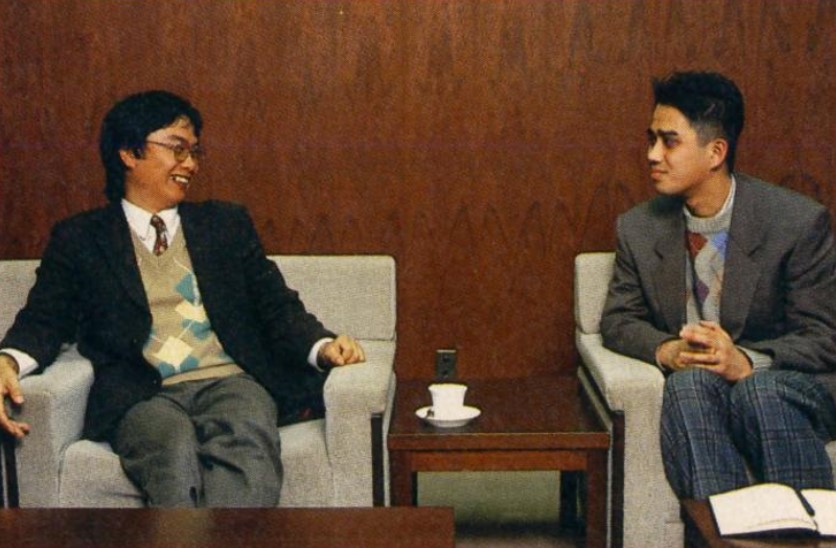
This delightful interview between Shigeru Miyamoto and Satoshi Tajiri was originally featured in the 4/93 issue of Hippon Super. Tajiri, who had begun his career as a game journalist, was juggling writing and game development (Pokemon was still a few years away); as such, the focus is mainly on Star Fox and Miyamoto's various opinions on STG games, CD-ROM media, and polygon graphics.
Tajiri: As the big new first-party Nintendo release, my expectations for Star Fox were very high. I caught myself overthinking it at first, but it turns out it's very fun! …sorry, I know that's not especially deep. (laughs)
Recently there's been a rush of new consoles announced, and most of them seem to be focused on how to digitize reality as faithfully as possible, raising resolutions and making objects look like actual objects. And yet in Star Fox you opted for abstract geometric shapes using polygons, which aren't anywhere near representing actual objects yet. What motivated that choice?
Miyamoto: Ah, I see we're taking a high-brow approach today. (laughs) I actually wanted to hear what you thought first, Tajiri. Did it feel cheap to you? Were you hoping for fancier graphics?
Tajiri: If we're talking about pure impulse-buy appeal, it feels like a ridiculously risky game. When you see it in a magazine, it just looks like a bunch of flat patterns. It's only once you see it in motion that you realize it gives you a totally different feeling of movement and trajectory. Star Fox is clearly made with the same spirit of generosity as all your other games, but because it's made of polygons and shown in static photos, I wondered if it was frustrating that still photos fail to convey its true appeal.
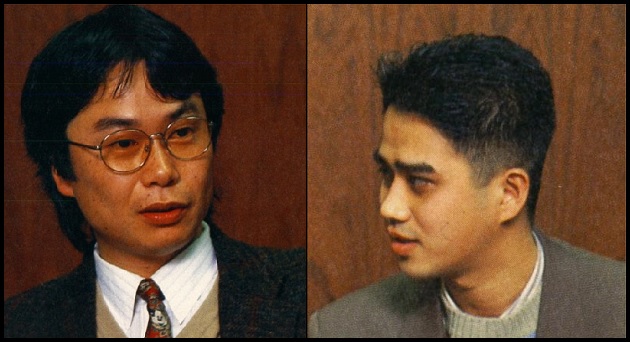
Miyamoto: Yeah. That's why what I wanted to hear most was whether you and your team played it and felt, "Hey, this is way better than it looks in a magazine." We built this on the premise that it's going to look great to the person who actually sits down and finishes it. When we ask people who've played it all the way through, about seventy percent tell us, "Once you play it, it just gets better and better." So I feel like our approach wasn't wrong. Of course, maybe they're just being polite, so I don't know how much of that is really true. (laughs)
Up until now, I think what we've been doing is making video games using symbols. Treat symbol A as a human, treat symbol B as a monster--it was a game of shapes. But there's an argument that on a level very similar to a novel, "Monster B" might feel more real to the player than a hyper-detailed monster drawing. Within that context, my view is that the Famicom was ultimately built on parodies of other things. When we moved to 16-bit, I kept wondering: is drawing in more graphics and boosting the resolution really what's going to make games more interesting?
Even back with Super Mario, I thought it was kinder to the player to pack a ton of game into a small memory footprint, even if we intentionally cut down the color palette. The more detail you draw in, the less it feels like Mario. It's like when a manga gets turned into an anime and people complain, "That's not what their voice was supposed to sound like," or when a great novel gets adapted into a movie and flops. I think video games are still in that generation.
So rather than just drawing finer pictures, we wanted to incorporate actual three-dimensional mechanics into our games and take 3D world design further. 3D gives you so many new dynamics to play with, right? Looking up at something towering from below, dealing with complex, multi-layered spaces, or having objects obscure what's behind them. When you think about which matters more--expressing those spatial elements or drawing objects to look like realistic 3D shapes--we felt incorporating more 3D elements was where the real fun lay. There are still so many things to explore, like atmospheric effects or wind.
No matter which machine you use, a computer ultimately has its limits. Sure, pre-rendered computer-style images look attractive, and ray tracing looks incredibly game-like. If all you're doing is showing people a still picture, you can make it look as detailed as you want. But when it comes to actual interactivity, hardware just isn't fast enough to render stuff like that on the fly yet.
Given where the technology is, when I think about what players want and what we want to make next, I feel symbols are still totally fine. Rather than worrying about whether it's hard to market, I'd rather bet on the idea that anyone who actually plays it won't be able to put it down. I've had that exact same mindset since Donkey Kong. On visuals alone it's not the kind of game you'd expect people to flock to, but we built it on the belief that once someone actually tried it themselves, they'd be hooked. I've never strayed from this approach. And I'm betting the same thing will happen with Star Fox, once people get a chance to play it.
Sorry, I'm really rambling on. That's what happens when I sit down with you, Tajiri. (laughs)
Tajiri: Haha!
Miyamoto: People are probably going to ask, "Why make a shooting game now? I thought you hated them."
Tajiri: Um, yeah… (bitter laugh) You in particular, and Nintendo as a whole, have mostly stayed away from the shooting genre until now. That's also why this release felt so surprising.
Miyamoto: A 3D shooter is actually the kind of game the first generation of game creators, from my age down to yours, wanted to make most. I'd always wanted to make one, but with the technology we had, I knew we'd end up with garbage, so I kept putting it off. The moment polygons became viable, it felt like revisiting that shared dream from when we first started making games, and I thought, "Let's give it a shot." (laughs) So when people ask, "Why make a shooter when the market for them is dead right now?", I honestly don't get the question. We made this totally naturally, and when you finish playing, it leaves you with that same sense of wonder. If everyone used to think of this as their dream game, why assume it won't sell now?
That said, I have no intention of grouping this in with the line of shooters running from Xevious to Gradius. Now, you could lump it together with After Burner, sure. But I have zero interest in framing it alongside conventional shooters.
Tajiri: What separates a "conventional shooter" from something like After Burner in your mind?
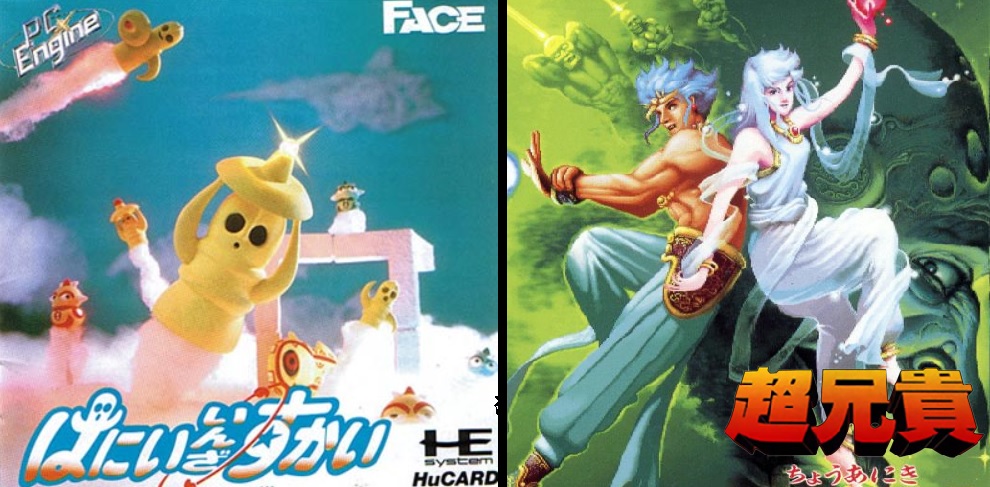
Miyamoto: A conventional shooter is a game where you dodge and shoot things on a flat plane. You call it a shooter simply because there happens to be a spaceship drawn on the screen. If it had a haniwa clay figure drawn on it, it'd be Hani in the Sky. (laughs) Or Cho Aniki, for that matter. (laughs) I think that's the right approach, actually, because you aren't limited to one visual style. But ever since Thexder, developers have just drawn robots and made games that didn't actually need to be about robots.
A 3D shooter, on the other hand, is fundamentally different. In a 3D space, you have things that are far away and things that are close. Even if your physical movement as a player is constrained to two dimensions, you can dodge and chase in three dimensions. You don't call something a shooter just because you're firing a laser. What matters is how the game actually creates that visceral thrill, and in that regard, Star Fox is a completely different beast. On a flat plane, you're playing with logic; in 3D, you're playing with spatial sense.
Tajiri: Ah, I see.
Miyamoto: Yeah, so I want people to play Star Fox intuitively. People who try to figure out a set strategy before playing never get good at it. The people who can just intuitively react to whatever is right in front of them tend to do really well. It even depends on how you're feeling that day! (laughs)
Tajiri: I totally get that.
Miyamoto: And another thing: it's not that I was actively avoiding shooters. It's just that everyone else got so ridiculously good at them that I decided not to compete on that battlefield anymore. If you wander into an arena like that, you just get pulverized. But shooting games were originally what got people talking about video games in the first place, even people who didn't play them. Shooters used to welcome even bad players and let them mess around casually, but lately, the genre has transformed into something that turns away anyone who isn't a pro. So if we're talking about a shooter in the purest sense, that's what I wanted Star Fox to be. But if today's elitist titles are what define a "shooter," then I'd rather you not call this a shooter at all.
Tajiri: Personally, I've never been a big fan of 3D shooters because they lack precision. You never really know where your shots are going. You get hit out of nowhere and just end up with this vague acceptance of, "Well, I guess I got shot." But the gameplay of Star Fox isn't like that. Despite what people say, its strength lies in its spatial awareness, the interplay of positioning between you and the enemy, forward and back, rather than just on a flat plane. That's something earlier games never fully pursued, not even After Burner. When I think about why that is… well, it's a common realization, but in twenty years of gaming history across thousands of titles, the core grammar of game design boils down to maybe twenty ideas.
Miyamoto: Yeah, that's true.
Tajiri: We've just been taking that extremely small set of tools, changing the recipe, and reshuffling the combinations over and over again. Because of that, there hasn't been a genuinely new game in a long while. Tetris came along and pushed a forgotten style of block-based gameplay to the forefront, but that was about it. As a developer myself, that's a painful reality, and it makes me want to try creating something genuinely new. I hear a lot of people say Star Fox is just bringing Starblade into the home, but I realized the sensation you get from playing it is completely different. Ultimately, the underlying "rhetoric" of the two games isn't the same.
Miyamoto: Right, though what both teams wanted to achieve initially was probably identical. But Starblade was refined specifically to survive in arcades, where the primary goal is getting the player to dump in as many coins as possible in a short timeframe, rather than encouraging repeat plays over a long period. As a home console game, long-term replay value was our top priority. (laughs)
Starblade and Solvalou actually came out while we were in the middle of the development. My staff and I were looking at them going, "Wow… they look very similar to what we're doing." They asked if we should scrap our work and start over, I said, "Nah, it's fine. In fact, if they have good ideas, let's steal 'em!" We even joked, "Let's call this project Sol-Blade!" (laughs) Up until about ten months ago, everyone on the team was actually calling it Sol-Blade while working on it. (laughs) I knew people would point fingers, but mostly I don't care at all if people say we were copying.
(thinks for a moment) Saying this is going to make Namco mad at me… But look, we said, "Let's just make it the Nintendo way." I mean, you could easily say Starblade is just a rip-off of Tron and Star Wars. Star Fox is a rip-off of Tron and Star Wars too, so we're in the same boat! (laughs) That's what I'll tell Namco if they say they did it first. (laughs) We're the Star Wars generation. But movies are a passive experience: you just sit there while they wash over you. We wanted to build a Star Wars you could experience for yourself, to give today's kids the same real-time excitement our generation had. That was our main motivation for making Star Fox.
In reality the reception has been much harsher than I expected. There was a lot of criticism. "It doesn't actually move that much." (laughs) We thought we had polished the presentation quite a bit to make it pop, but these days people are spoiled by flashy CG graphics. They immediately compare our real-time polygons to pre-rendered video playback. But comparing the two is like looking at a LaserDisc and talking about Famicom specs, they're completely different things. That said, I'm confident there isn't a game on the market right now, even on the Amiga, that touches the level of Star Fox.
Tajiri: When did you first start seeing the potential of polygons?
Miyamoto: We were talking about polygons long before the Super Famicom was even released. I was actually experimenting with them back in the Famicom Disk System days.
Tajiri: (!) Really?
Miyamoto: When Irem released Kineko, I thought, "Ah, double-buffering! Damn, they got there first." Meanwhile we kept trying different ideas on our end. Ultimately, we couldn't make the Super Famicom into a true 3D graphics machine, but we wanted to see how much we could do with the base system. The results weren't great, though, and that was when I knew we'd have to design a custom chip.
Right around that time, we heard of a UK company called Argonaut that had polygon tech, so we decided to partner up with them. From there to completion, Star Fox took two and a half years. The direction was 100% Nintendo. But tell me, Tajiri, was it actually fun? Truly? Or were you thinking, "Well, I guess I'd buy it... if it goes on sale."
Tajiri: No, the price felt just right to me. It's actually incredible that we can have an experience like this in our living rooms for only 9800 yen.
Miyamoto: Nice. Hearing you say that makes me really happy. What a relief! When you think about it that way, maybe we should have been charging 30000 yen. (laughs)
I'm constantly weighing all these trade-offs, but the reality is that the games that sell best are the ones that offer immediate fun at an affordable price. And because those games sell, the next generation of hardware and software can be born. We like to talk about the grand future of gaming, but if we don't also address the immediate present, the medium can't evolve. "Dream big, aim high, but never lose focus of the work in front of you." And in that sense, I think Star Fox delivers. (laughs) So please go buy it everyone… you're funding the next generation! (laughs)
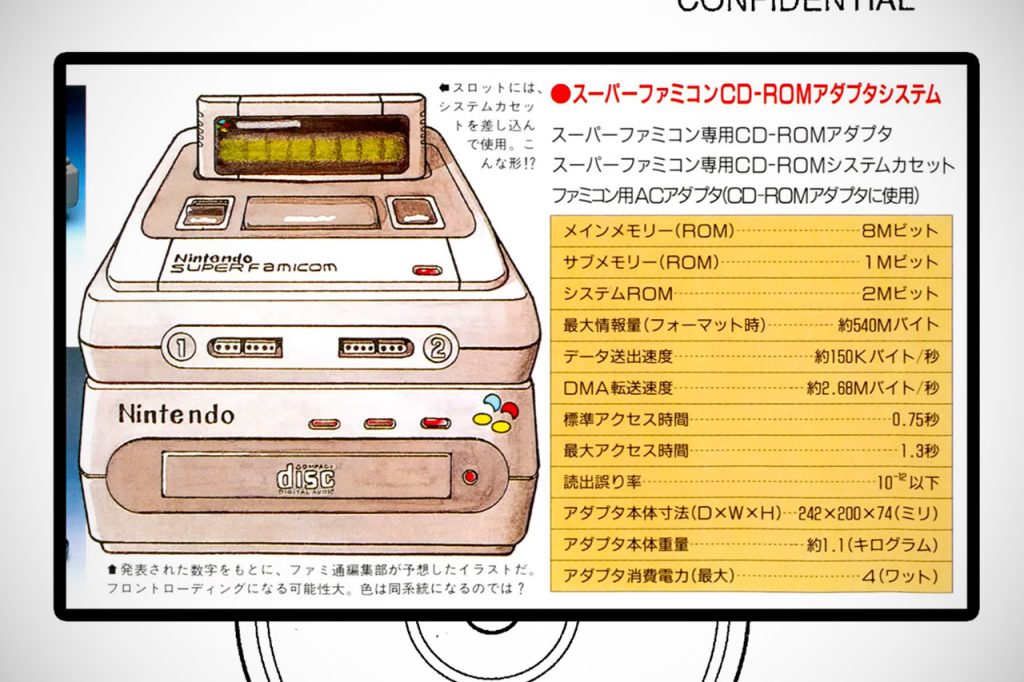
Tajiri: Speaking of the future versus the present, that brings CD-ROMs to mind. Despite that hardware being around for years now, nobody is discussing genuine gameplay ideas to take advantage of it.
Miyamoto: Everyone's chanting the same refrain: "It's an RPG with animated cutscenes!" At that point, you might as well just use a LaserDisc. (laughs)
Tajiri: People getting hyped up for a future that never materializes. I once saw a CD release that was literally just 500 tiny puzzle games crammed onto one disc.
Miyamoto: In a way that might actually be the smarter approach. That use of CD-ROM fully commits to leveraging the medium for what it is. Initially, there was an optimism about using CDs because people thought they would eliminate physical media costs entirely. But that would be a big problem for all the businesses who depend on physical media sales. They'd all go under. I probably shouldn't be saying stuff like this… (laughs)
Lately, though, everyone has started asking, "Who's actually going to make these massive-capacity games? Can a console even sell if developers don't want to make games for it?" And that's no good either. So it's got me thinking, maybe we should join the pro-CD camp and show people clever ways to use the medium. (laughs)
Tajiri: I'm focusing mostly on game development right now myself, and I will say that developing for the Super Famicom is tough. The dev tools are so primitive. We have to spend time laboriously grinding out our own tools before we can even make the game. Then if the tools have bugs we have to rebuild them and repeat the whole cycle. All that to make a single game… it's exhausting. If the development environment doesn't improve when we move to CD-ROMs, smaller teams like mine won't be able to keep up at all.
Miyamoto: There are people who don't build software themselves, but dedicate their lives solely to constructing development environments. We have to work together with them. We have to give them interesting work to do. Because it's all part of making things.
Ideally, I want to be directly involved in the creation as much as possible, while keeping the number of pure tool-operators to a minimum. That's why I love polygon games. They can be made by small teams. The more you chase hyper-elaborate pre-rendered CG, the more your project relies on a huge team of people you don't even know. If I'm being honest (the kind of honesty you can't print in a magazine), I really don't want to go down that path.
Tajiri: Watch, all those off-the-record comments are probably going to be the only thing I end up printing!
Miyamoto: Well, I'm talking this way because I don't mind if it gets out there. But the fact that we got into this topic shows why it was worth having you come do this interview, Tajiri. I wouldn't be saying any of this if the interviewer weren't an active developer.
The way I see it, the actual creative spark of making a game happens in a flash. The entire reality of a development is just figuring out how to bring that split-second idea into physical existence. To take an extreme example, a design doc can be written in thirty minutes. An idea can be researched in five. Everything that comes after is just work to fill in the gaps. You have this concept in your head and you want to see it realized as fast as possible: "Programmers, hurry up! I don't care if it's rough, just get this built!" If you don't have a director pushing with that constant sense of urgency, a project will never get finished. But at the same time, you have to fight the urge to rush things just to see the final product. That balance is crucial.
For instance, say I pitch an idea today and draw a quick sketch. The programmer wants to jump on it, but they can't code anything until the artwork comes in. Back in the day, you could just use a placeholder box and swap the graphics later, but sprite animation is so complex now that programmers want to wait for the final art before they even try.
Polygon animation, on the other hand, is handled entirely in code, so you can see the movement in a single day. Sure, if you spend three days tweaking it, it takes the same amount of time in the end, but you get to verify it immediately. Some folks claim you're an amateur if you need to see a working prototype first, but I think seeing the motion first, and refining the art second, is by far the best approach. Polygons are perfectly suited for that workflow. Polygons are great! (laughs)
That said, when you work with technology, it's easy to get drunk on it. You want to brag and show off your cool new toy. "Hey guys, look how amazing this is!" Luckily I've got a smart team and they see right through that. They'll stare at me with this blank look on their faces, "Yeah… so what?" That always brings me back down to earth, and reminds me that while this technology is cool, we haven't locked in that distinct Nintendo originality yet. Then it's right back to work. I really am lucky to have such good people. (laughs)
Interview Post-Mortem
By Satoshi Tajiri
It's been a while since my last appearance in Hippon Super! I've been focusing entirely on game production lately and haven't done much publishing work. But I think this interview turned out to have a level of depth you won't find in other magazines. What did you think?
Miyamoto's insights went far beyond Star Fox, expanding into a deep philosophy on video games as a whole. In our brief interview time, his words came pouring out with such density and speed that we couldn't even fit everything onto these four pages!
I felt that the true essence of what makes video games fun was hidden inside his words like buried treasure. Speaking as a game developer myself, I learned a tremendous amount from the experience. On the bullet train back to Tokyo after the interview, despite being exhausted, I was so pumped up that I couldn't sleep at all!

If you've enjoyed reading this interview and would like to be able to vote each month on what I translate, please consider supporting me on Patreon! I can't do it without your help!
Great interview! Thank you for translating!
Great interveiew, its amazing how much Miyamoto understood the industry then and even now
Miyamoto really knows his stuff when it comes to game dev, it’s impressive. Also super cool to read Tajiri’s interviews from back when Pokémon was still in development / about to come out. One of the greatest games ever! Thanks for the translations!