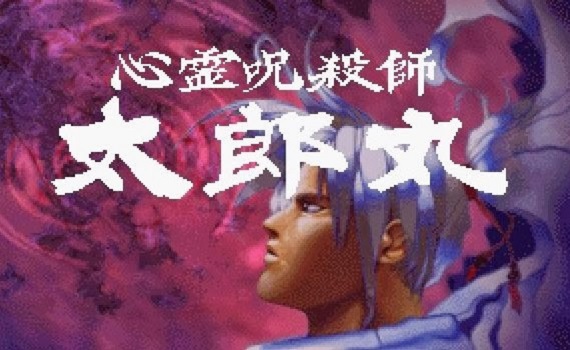
Shinrei Jusatsushi Tarōmaru – 2024 Developer Interview
Shinrei Jusatsushi Taromaru (Psychic Killer Taromaru) is a highly regarded action platformer for the Sega Saturn and the last game released by Time Warner Interactive. Originally featured in the Game Rabo Sega Saturn 30th Anniversary mook, this illuminating interview with graphic designer Kenichi Nemoto covers the conception and design of Taromaru, as well as his early roots and close association with Gamest magazine.
—Around when did you first start drawing?
Nemoto: I've been drawing since I was a little kid, so I don't really remember what the trigger was. I used to stay at home and draw endlessly, because going outside to play wasn't my thing. My junior high didn't have a manga club, but there was a gathering of manga enthusiasts under the guise of an art club, and that's when I started drawing even more.
—What kind of manga and anime did you like back then?
Nemoto: From junior high onward, I watched a variety of things, including tokusatsu shows. I really liked Macross and Orguss, and I used to copy them when I drew. As for Gundam, I watched the reruns.
—How did you first encounter video games?
Nemoto: During the Space Invaders boom, three different arcades opened up just a 20-minute bike ride from my house. They had Space Invaders, Head On, Lunar Rescue… I didn't have any money, so I was strictly a spectator, but I loved all of them. I couldn't play it much, but the cute designs of Sega's Space Attack left a strong impression on me. And seeing Pac-Man for the first time was a revelation. That's when I started actually frequenting arcades regularly.
—Which game left the deepest impression on you?
Nemoto: I'd have to say Castlevania on the Famicom. I loved Castlevania so much, I even helped out with the strategy video for Haunted Castle by controlling the player.1 I was particularly fond of Castlevania III, as well as Esper Dream and Ai Senshi Nicol. I basically loved Konami games and played them all the time.
—What is the origin of your pen name, Kainanpuu (海軟風, sea breeze)?
Nemoto: When I was choosing a high school, I picked one specifically because it had a manga club. Then, during my third year, my friends and I decided we should come up with proper pen names. We were brainstorming together and flipping through a dictionary when I happened to stumble upon that word. It was defined as "a gentle breeze blowing from the sea, though it can sometimes turn violent and cause ships to run aground." I thought that sounded cool.

—Many people strongly associate you with Gamest magazine, based on the work you did for them over the years.
Nemoto: My first encounter with Gamest was actually winning a coloring contest. I figured it would be easy since I wouldn't have to think up an actual drawing. (laughs) I didn't start submitting illustrations seriously until after graduating high school, and I mostly sent them to Comptiq. I bought and read both magazines continuously.
—You also handled the illustrations for the serialized novel "Lieutenant Miles's Diaries" in Jingai Club, a publication distributed at Namco-operated stores in the Kanto region, correct?
Nemoto: The manager of the Higashi-Kurume Carrot House arcade at the time told me, "We're making something like this, would you want to draw for it?" That's what got me started.
—What was your connection to the Carrot House arcades?
Nemoto: My school was in Ochanomizu, so from my first year of high school, I frequented the Higashi-Kurume Carrot House and the Tecmo-operated arcade in Jinbocho. Stopping by Higashi-Kurume on my way home was part of my daily routine, even though it was a roundabout route. There was a high score board inside the shop, and the regulars who were great at drawing would sketch illustrations next to the posted scores. I noticed there were people with highly unique styles, like Han-kun, and though there was a communication notebook, we didn't actually interact back then.
—How did that eventually lead you to Gamest?
Nemoto: I think it was around the time I graduated high school. I wanted to work part-time at the Tecmo arcade in Jinbocho, but when I asked a staff member I was friendly with, they told me a new location was opening near my house in Shin-Tokorozawa. So I ended up working there instead. However, it turned out to be a place focused primarily on billiards. It had about ten pool tables, and video games were just placed there for people waiting for a table to open up.
—I remember that time. The movie The Color of Money was a massive hit and sparked a pool bar boom in Japan, and Tecmo was putting a lot of effort into billiards then.
Nemoto: Exactly. Right around the time my coloring contest entry was published, Kuri, who was a regular at Higashi-Kurume Carrot House, came to visit the Shin-Tokorozawa Tecmo. He told me there was a staff vacancy back at Higashi-Kurume, so I decided to return there. Through Kuri, I was introduced to Han-kun, Joe Yamada, and Ari. That led to the Lieutenant Miles illustrations, which eventually connected me to the Gamest editorial department. Basically, I worked part-time at Carrot during the week, and on weekends I'd go to Shinseisha to pick up any available work to draw back home.
—A lot of luminaries crossed your path there. Kuri was aviation writer Kuri, the second person to be in charge of the Gamest reader corner. Joe Yamada wrote game music articles. Vertex-Fancy-Ali, also known as Yuri Yamakawa, handled strategy guides. And Han (Tetsuhiko Kikuchi) would later take the world by storm with his designs for Gunstar Heroes. What was your very first job for Gamest?
Nemoto: It was the illustrations and maps for The NewZealand Story.

—Your cover illustration for Sega's Gain Ground also left a strong impression.
Nemoto: Looking at it now is a bit embarrassing. It's a dark chapter in my past. (bitter smile)
—How did you come to join Tengen, the subsidiary of Atari Games?
Nemoto: The manager at Carrot told me that a designer at a company called Tengen had resigned and they were looking for a replacement, so he suggested I check it out.
—Did you know about Tengen at the time?
Nemoto: Not at all. I barely knew of Atari, but I had absolutely no idea what kind of games Tengen made. I just wanted a job making games, so I thought it sounded like a good opportunity.
—Did you join straight out of school?
Nemoto: I was treated as a fresh-graduate hire. I joined on April 1, 1990. The interview didn't even take place at the office—it was at a bar. (laughs) Amanai was there, and I showed him my drawings. He just said, "Alright, you're hired. Let's drink!" (laughs) It felt like the decision was made right then and there. I drank so much that day that I don't remember much else about the interview.
—Jun Amanai was the "backbone" programmer of the company. Was the president, Kazuo Matsunaga, not present for your interview?
Nemoto: Matsunaga was there too.
—Tengen itself was founded in 1987, but its actual operations in Japan began in September 1988. This was because Kazuo Matsunaga, who had been an executive in Namco's development division, left the company at the request of Atari Games president Hideyuki Nakajima to become Tengen's president. Since the company had only been established for a little over a year, what was the atmosphere like inside the office?
Nemoto: We were renting a single apartment room. There was President Matsunaga, Amanai for software, and Nagashima for design. There were only three people. Nagashima was the guy who was leaving, and I was brought on as his replacement. I had absolutely no experience in game development, so he taught me the basic procedures and workflow, and once I could handle everything on my own, he departed.
—So Masato Nagashima remained briefly during the transition.
Nemoto: Yes, I believe he stayed to help. The training period lasted about six months, I think. For a while, it was just the three of us running things, but then a sound guy named Kenji Yokoyama joined, making us a four-person team. That was pretty much the core initial staff. We worked as those four for a long time.
—What was your first project at Tengen?
Nemoto: When I joined, Klax for the PC Engine was already nearly complete, so I worked on promotional items. I designed a Klax-themed cigarette package and a windbreaker. That was my very first job. (laughs)
—What kind of graphics tool did you use to create pixel art?
Nemoto: A pixel art tool made by Hudson… yeah, I'm pretty sure that was it. Back then, we were primarily developing for the PC Engine and Mega Drive. We kept using that tool right until the company dissolved.
—It was a shame that so many scheduled PC Engine releases ended up cancelled.
Nemoto: Marble Madness and Magical Puzzle Popils were actually almost complete. Peter Packrat and Off the Wall had taken shape, but they were still quite rough around the edges and hadn't reached commercial quality. I still had a student mindset back then and didn't take my job as seriously, so I never asked the reason why. It remains a mystery to me.
—On September 1, 1994, due to a policy shift by Time Warner (Atari Games' parent company), Tengen's name was changed to Time Warner Interactive. The first title released under the new name was the Saturn/PlayStation launch game TAMA.
Nemoto: TAMA was our first internal production, made using our own proprietary 3D tool. Up until then, we had only ported overseas titles, so the goal was to hire more staff and create our own IP. Along with Race Drivin', there were several pitches being kicked around at the time, including a Japanese-style action game.
—Tarōmaru features a world that could be described as "Japanese horror." As someone captivated by Castlevania, what was your role on this project?
Nemoto: I handled the character designs, the pixel art for the main characters and enemies, and the boss designs and pixel art. Around this time, I was heavily inspired by Taro Yamada's Ninpōchō (Ninja Scroll) series. I've also been influenced by Masamune Shirow for a long time, so that bled into it as well.
—The advertising for Taromaru focused on the key visuals, which overall felt very influenced by Capcom.
Nemoto: The initial illustrations were quite large, around B3 size. I painted them using acrylics and Liquitex. Street Fighter Zero was incredibly popular then. I loved it too, so I wanted to mimic that style a bit. (laughs)

—Tarōmaru is essentially a boss-rush game featuring 24 bosses. Did you design all of them?
Nemoto: No, Iuchi and Okano also drew some of the bosses. Iuchi handled the "Skeleton Brothers" who appear early on: Shikotsuryū, Ichirōmaru, Jirōmaru, Sakanamaru, Setsunamaru Juma, Gorōmaru, and Mukurōmaru.2 He also did the multi-jointed human-faced spider, and the purple and red spider bosses. Okano joined the boss design process starting from the late game. He created the long white-haired demon who manipulates that strange spider mech, the Japanese-style Beelzebub demon, and Dakiniten, who looks like Dhalsim. The rest of the bosses were all drawn by me.
—The way the walls of Edo Castle sloped into the darkness was striking in Taromaru. So you didn't draw the Heavenly Kings (Shitenno)?
Nemoto: No, I didn't. But I did draw the bosses after that: Kairaihime (Marrionette Princess), Tsunayoshi Tokugawa, and the final boss. We ran out of time before deciding on a name for the final boss, so even today, it remains nameless.
—Every boss was highly distinct, with very well thought-out attack patterns.
Nemoto: I believe it was Iuchi who suggested making it a boss-rush game, reasoning that if stages were too long, it wouldn't be fun, so we should just have bosses appear one after another. That's also why he wanted to eliminate loading times between stages and keep everything seamlessly connected.
—It really is seamless.
Nemoto: The game was reading data in the background during stages so the player wouldn't notice any loading times. Iuchi came up with those kinds of technical ideas.
—What was your impression of Hiroshi Iuchi, who had come over from Treasure?
Nemoto: At first we didn't talk much, but watching him work on pixel art, his cleanup was incredibly clean. I realized an amazing talent had arrived. At the time, I wasn't really thinking about Treasure; I just knew he had made Quarth at Konami. I loved Quarth, so I was like, "Whoa!" (laughs) He told me stories about working on the characters for Aliens, and he taught me techniques for drawing and animating that I put to use in Tarōmaru. Looking at Iuchi's background graphics, I tried to incorporate that taste into my own pixel art.
—Iuchi is credited with background design in Taromaru.
Nemoto: His trees are just beautiful. The leaves are intricately drawn, and the moon is gorgeous. He also used aerial perspective, which was something I couldn't have drawn myself back then. Iuchi handled an immense volume of background work, in both 2D and 3D.
—What was your collaboration like with designer Michio Okano during the planning phase?
Nemoto: Initially, Iuchi brainstormed a lot of game concepts and was the main person driving the project. I would show him my character and boss settings and pixel art, and we'd discuss them. So the fundamental level design came from Iuchi. Okano was involved too, but he transitioned into a managerial, organizing role around the midpoint of development.
The late-game stages weren't decided from the start; after we finished the section where you see Edo in flames in the background, only then did Okano and Iuchi start mapping out the rest of the game. I remember consulting with Matsunaga about wanting to increase the game's volume, which led to us constructing the castle interior areas. Inside a castle, you can reuse the same background patterns without it feeling out of place.
—That explains how Okano ended up drawing the white-haired demon and the Four Heavenly Kings, which appear around there.
Nemoto: Yeah, I feel like Okano's weight in the level design increased significantly starting from the castle town. Of course, if you want to increase the volume and make the game longer, naturally the deadline has to get pushed back. We were originally aiming for a late 1996 release. Once the deadline got pushed back, and we still had all those extra assets to create, Okano really threw himself into the development. We had started as a three-person team but now moved towards the finish line as a four-person team. The final stretch was incredibly intense; I had to pick up the slack and help draw some of the background models and textures, and Iuchi ended up drawing some of the ending characters.
—Were the stampeding bulls an homage to Konami's Sunset Riders?
Nemoto: Iuchi was the one who put that in, so it might be. However, our company had a bit of an obsession with cows, like in Hard Drivin'. It might have actually been from that. (laughs)

—What was your communication like with the software engineers, Osamu Yamamoto and Kazuya Furukawa?
Nemoto: Yamamoto was a dependable programmer who had been with us since near the beginning. Furukawa was a newcomer, so Yamamoto really went the extra mile and helped him out immensely. The character animation patterns needed more frames than we had originally anticipated, but Furukawa wrote a program to interpolate between those frames, making the movements much smoother. Also, to tell you the truth, I accidentally drew the character sprites smaller than how they were supposed to appear in-game. They managed to use software scaling to expand them by a certain percentage to make them larger.
—So Yamamoto was someone you could really rely on.
Nemoto: Yes. I would just hand him a piece of paper outlining how I wanted a boss to behave along with the character data, and tell him, "Please program it just like this." (laughs) It was pretty much a one-way street, and he took care of everything for me.
—How about the sound team, Kenji Yokoyama and Shunichi Hanawa?
Nemoto: I've known Yokoyama for a long time, and I felt he delivered yet another great soundtrack for us.
—What about Misao Yanagi, who did the calligraphy for the title logo?
Nemoto: I believe someone on our internal planning staff found her and asked her to write it. Maybe they were acquaintances?
—Did you feel any disappointment that your own artwork wasn't used for the package cover?
Nemoto: Not at all. I didn't have the mental bandwidth to even think about that. I was already completely overwhelmed.
—Did any internal staff participate in the voice acting?
Nemoto: I expect the voices would have been handled externally. But I'm not sure if they were voice actors or theater actors. That was a department I wasn't involved with…
—The whole game was an onslaught of unforgettable, quotable lines. (laughs)
Nemoto: I didn't really understand what was going on with that either. When I saw it later, I remember being surprised. "Wow, so this is how it turned out." (laughs) But it was funny, so whatever. I had my hands full with my own tasks and didn't have the luxury to worry about other departments.
—On January 17, 1997, Shinrei Jusatsushi Tarōmaru was released. How did it feel?
Nemoto: Well… by that point, we already knew the company was going to dissolve. So my overriding feeling was just relief that it actually managed to come out. I like to think it was the fulfilment of a long-held dream for Matsunaga.
—What about the originally planned PlayStation version?
Nemoto: No work was done on that at all…
—During Tarōmaru's development, Time Warner Interactive was acquired by Williams, and just two weeks after the game's release, on January 31, the office was closed down.
Nemoto: Yeah. We just barely made it.

—Before the game launched, a staff doujinshi titled Jusatsu Club was released at the Winter Comic Market. What was the story behind that?
Nemoto: Well, the company was going under. It wasn't some desperate bid on our part or anything, but we did want to leave something behind. We figured, "It's all over, so nobody's going to get mad at us, right?" (laughs) The publisher, Okubo, was a programmer, and he and I were actually teaming up to pitch our next project. Meanwhile, Iuchi was working with Yamamoto on a shooting game project.
—So Iuchi had already started development on what would become Radiant Silvergun.
Nemoto: I don't know if that specific prototype became Silvergun, but he mentioned wanting to make a shmup, and I recall a prototype was up and running.
—Looking back now, what are your sentiments?
Nemoto: I don't really have any special sentimental feelings. It's not like I look back thinking "I gave it my absolute all," it's more like, "Yeah, I did that." Because it was an original IP, it was easy to work with, easy to draw, and easy to visualize. It was only later when people around me started calling it an amazing game and I realized how rare it had become that I thought, "Wait… you're right! It is a great game!" (laughs)
—If you have any announcements, please share them!
Nemoto: I post illustrations of retro games on X under the handle @kainanp. Please give me a follow if you'd like!

If you've enjoyed reading this interview and would like to be able to vote each month on what I translate, please consider supporting me on Patreon! I can't do it without your help!