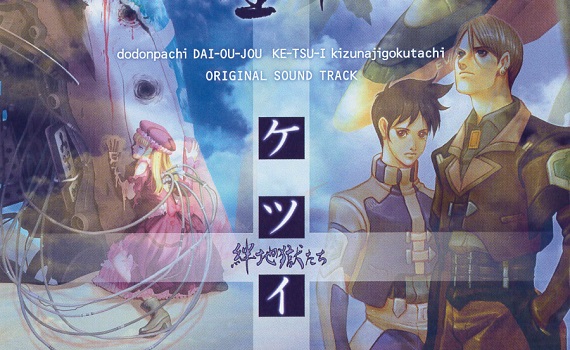
Manabu Namiki – 2009 Composer Interview
Conducted by the now-defunct game music/soundtrack portal GA-Core, this long interview with veteran composer, audio engineer and game developer Manabu Namiki details his lifelong fascination with games and game music, his entry into the game industry, his philosophy on game composition, and his many works spanning Allumer, NMK, Raizing, Cave and beyond.
Manabu Namiki (Santaruru)
As a boy, I dreamed of games and robots
Shigihara: To start off, please tell me where your interest in music began.
Namiki: I still have vivid memories listening to "Kaettekita Yopparai (The Drunkard Returns)" by Kazuhiko Kato, who passed away recently, over and over again on cassette tape as a child. The lyrics, and Kato's voice, were unique and intriguing. I also often listened to [Masato Shimon's] "Oyoge! Taiyaki-kun (Swim! Taiyaki)" which became a hit via a certain children's TV show, as well as the flexi-disc distributed with a children's magazine.
Ohno: Given your age, Namiki-san, I'm guessing you weren't listening to songs like those when they were contemporary, right?
Namiki: Right, my parent had bought the tapes for those songs when they were young.
Ohno: Did your parents push you to take piano or study other instruments?
Namiki: No, I have no background with taking lessons or playing an instrument. When I began elementary school, I started watching TV top-ten shows like most people, but I never thought of pursuing a career in music. When I was in fifth grade, as part of the school's broadcasting club, I was in charge of playing music on the school's PA system on the way to and from school and during lunch breaks, and I remember getting a big reaction after playing records by artists like YMO, The Drifters and Imokin Trio. Looking back, this might've been what triggered my interest in YMO.
Shigihara: During that time, in elementary and junior high, no matter where you went, you'd be hearing at least one YMO record.
Namiki: Yeah, "Rydeen" was played at sports days. As for me, at that age, I was more into drawing Doraemon and other manga characters than drawing music.. In fact, an illustration I submitted was published in the illustration section of the Mainichi Shogakusei Shinbun (Mainichi Elementary School Newspaper, aka "Maisho") and I was awarded a fountain pen as a prize. I'm pretty sure I drew a picture of Shunji Sonoyama's Ganbare Gombe.
Shigihara: I was also obsessed with Maisho for a while. Wow, that takes me back!
Namiki: Also, as a child, I had a big interest in robots due to manga like Astro Boy, so during my elementary school days, I went to see the Great Robot Exhibition at Takashimaya in Nihonbashi. I recall seeing Mappy and Nyamco, which were made by Namco at the time, being used as part of a maze-escape robotics exhibition called Micromouse. These robots were so cute… I was strangely excited when I realized that games like Pac-Man and those robots were made by the same company, and I remember asking the hostess, "Is this the same Namco that makes Pac-Man?" and being asked, "How do you know that!?"
(everyone laughs)
Shigihara: I remember reading about the Great Robot Exhibition in Shogaku Ni-nensei as a kid. Back then, kids were in awe of robots of all kinds.
Namiki: As time passed, my interest began to shift towards the burgeoning microcomputer scene, and when arcade games started to be available in the candy stores and bookstores around my neighborhood, I eventually began playing and listening to those games with my friends.

Shigihara: So your interests gradually shifted to the sounds coming out of those game machines, then?
Namiki: Right. The electronic sounds produced by those game machines sounded unlike anything else, so I gradually became captivated by the idea that games were devices of producing peculiar sounds.
Ohno: I guess that pushed you to buy your own computer and start producing sounds with BASIC, or something?
Namiki: No, I was part of the "naicom tribe"1 and couldn't afford a computer, so I wasn't making those sort of moves just yet. Ah, I remember that on Sundays, my mother would pack me some rice balls and I'd go to the local department store and mess around with the computers in the electronics section for a long while; when lunchtime came, I'd head to the rooftop to eat my lunch, and when I was done, I would come back and play for the rest of the day.
Shigihara: As a kid, I did the exact same thing when I'd travel to faraway towns to play in their arcades (laughs).
Namiki: I'm sure the store clerks found it irritating, but when I look back on it now, those grown-ups were really kind back then (laughs). Even though I never bought anything, I was always toying away with stuff, but nobody ever got mad or threw me out, so I had a great time…
Memories of game music
Shigihara: Did you regularly visit arcades back then?
Namiki: Yeah. I lived in Matsudo in Chiba Prefecture, so I used to go to Mekuman back when it'd just opened. However, the arcades back then were dark and filled with cigarette smoke, so to an elementary school student, they had a scary vibe… it was like, "children, begone!"
Shigihara: Which games made the biggest impression on you back then?
Namiki: I was into Galaxian and Crazy Climber which were playable at the corner store, as well as Crush Roller, Jump Bug and Kangaroo. Pac-Man was probably my favorite. These games were essentially music-free—they only played sounds when you'd lose, or little jingles here and there—but even that was captivating to me. Ah, actually, Kangaroo did have background music.
Shigihara: When we were kids, just watching other people play and hearing the sounds come out of the machine was fun.
Namiki: Yeah. Even when I had no money, I'd find places that had games running and just listen to the machines or watch the games on the screen. Playing every game I could find and hearing every sound was a daily ritual for me, and even at school, I was constantly daydreaming about games during class (laughs).
Shigihara: Was there a game that made you start thinking about game sounds in a purely musical way?
Namiki: The first in-game song that really caught my ear was New Rally X... I think that game's BGM was the first tune I enjoyed enough to hum along as I played the game.
Shigihara: So from there, before you knew it, you'd started copying game BGM by ear?
Namiki: No, my fascination wasn't that deep at that time—I'd just enjoy humming along as I played, and that was as far as it went..
Ohno: According to New Rally X's composer, [Nobuyuki] Ohnogi, his initial image for the song was of one being performed by a brass ensemble, and then when he tested it out on the hardware, it naturally sounded as you hear in-game.
Namiki: Ah, I see! Incidentally, the New Rally X BGM was used as a jingle for the listener postcard segment on Teruko Ohashi's Radio WA American program, right? Actually, the reason I began listening to this program was because it allowed me to hear game music on the radio. I was still in elementary school and couldn't stay awake to listen to the late-night broadcast, so I'd set my alarm clock to go off when the show started, go to sleep, wake up when the alarm went off, listen to the radio, and go back to sleep. By the way, some of the postcards I submitted were read on the program, and I also attended some of the public broadcasts held at the Yakult Hall (now Nissho Hall) in Shinbashi.
Shigihara: What was the first game music soundtrack you bought?
Namiki: That'd be Video Game Music, a compilation of Namco game music that I bought as a junior high student. I remember pre-ordering it at a store and buying the LP on release day, and when I picked it up, I was ecstatic.
Ohno: When you were placing your pre-order, was the person behind the counter like, "what are you talking about?" even as you told them exactly what you wanted to buy?
Namiki: Yes, that's exactly what happened—they told me, "there's no such thing on our release schedule," and I had to desperately insist that they were mistaken (laughs). I'm sure this is probably true of a lot of other people in our industry, but I think that this record was what led me to the work I'm doing today.
Ohno: How did you find out about that record?
Namiki: I want to say I read about it in Amusement Life, a magazine that was one of the only sources of information on arcade games at the time. Hmm, or maybe I learned about it in an issue of NG at one of Namco's game centers? In the early days of NG, they'd share news and information on robotics as well as games, so I read that one quite a lot.
Shigihara: During high school or college, did you ever perform live at any of your school festivals?
Namiki: I did! During my high school days—exactly 20 years ago, and around this time of year—I performed at my school festival as part of a game music cover band with a classmate named Jun Watanabe and some other pals. Watanabe owned a sampler and a synthesizer and was quite knowledgeable about game music, so we became fast friends.. I was also collecting a lot of Scitron game music CDs back then; almost all the income I was earning from my part-time job was going to those CDs, including those published during the Alfa Records era. I think I collected pretty much every GSM1500 Series release.
Ohno: Good stuff! (laughs) By the way, what songs did you perform at your festival?
Namiki: The main theme from The Ninja Warriors as well as songs from games like Out Run, Afterburner and Midnight Landing. That said, I couldn't really play, so I was bumbling through them on the keyboard using only two or three fingers on one hand (laughs).
Ohno: Did you attend any of the Game Music Festivals?
Namiki: Yeah, I saw the 1990 event. Here's a little aside: when Watanabe bought the Game Music Festival live album, he and I actually wrote to Scitron about it. We were quite hot-headed at the time, so we wrote a pretty cringeworthy letter that was like, "this soundtrack is totally unsatisfactory!" A few days later, we received a really long letter in reply, written by Ohno, that said something like, "You don't have the faintest clue about anything! The realities of production presented us with this issue and that issue...",
Ohno: Oh, really? What a childish response.
(everyone laughs)
His game industry debut, made as a ronin
Shigihara: When did you begin to realize that you wanted to work in game development in the future?
Namiki: It's something I'd started to thinking about since I started playing games in candy stores. However, I didn't give any thought about working in sound production—I had no idea that such a thing as "sound production" even existed, for starters. I'd seen those Namco robots at the Great Robot Exhibition, so I had a basic, childish notion that if I joined a company like that one, there'd be a lot of nice old guys there who were kind to children. At that time, the Expo '85 world's fair was held in Tsukuba, and it was an era where the future being shown to children seemed bright, but the same was also true of the booms with microcomputers and games, and the graphics and sound being presented by games were constantly evolving, so I had a vague sense of purchase about riding that wave in the future and working on some sort of futuristic pursuit.
Shigihara: Did you go to a technical high school?
Namiki: No, I didn't give any concrete thought to how I'd get such a job, so I went to a regular high school. Ultimately, I wasn't given any real understanding or guidance from my parents: they said, "Whatever you want to do, make sure to study hard, finish college and then go do it." They weren't wrong, though. (laughs)
Ohno: So you were a good student during those days, then?
Namiki: Well, as games became more and more of an obsession, from around my junior high years, my test scores started to decline… I was also attending a cram school at the time, but I'd often go to arcades with friends from the same school and play games like Fantasy Zone and Baraduke (laughs).
Shigihara: Your website says that your first job in the games industry was as a part-timer at Allumer. What led to you getting that job?
Namiki: I was introduced to the company by a friend who was working there part-time. One day, he asked me, "A bunch of people quit at once, so we're short on staff—why don't you come for a visit?" At the time, I was still attending that cram school, pretending to my parents that I was preparing to get into university (laughs), and I had no idea how to get in contact with a game company, so I told my friend that I'd be there right away. When I arrived there, the president greeted me and hired me on the spot, saying "we don't have anyone to work on graphics".
Shigihara: Did you you anything about programming going in?
Namiki: Yeah, I bought an MSX2 during my first year of high school using the money from my part-time job, and from there I started playing around with BASIC and machine assembly, little by little. I had no artistic talent, but I owned a computer and knew how they worked, so I guess that was enough to make them want to hire me. As for sound, I started out playing PSG sounds with MML, but that method only produced very basic, uniform sounds, and I gradually came to learn that generating sounds via assembly allowed one to produce all sorts of unique sounds. I can remember looking at a code listing in MSX Magazine called "The Ultimate PSG Performance Program" or something, and analysing the playback routines using tunes I'd made myself. I'd even type in riffs from hard rock and heavy metal songs that I liked at the time and test whether I could recreate them. Even so, I was still nowhere near what one might consider a serious programmer, or a serious composer.
Shigihara: I see! I'm sure the origins of the "Santaruru Style" were borne from these early days.
Namiki: Yes, I'm sure it's floating around in there somewhere.
Shigihara: So, what games were you in charge of developing at Allumer?
Namiki: A shooting game called Rezon. I'd fire the editor and use the mouse to draw stuff like item carriers and explosion animation frames—"dot-bashing", in other words. At the time, there was a designer at Allumer who had graduated from an art school, so I learned a lot from him about how to draw and worked to complete the tasks assigned to me.
Shigihara: You didn't work on sound, then?
Namiki: Right, the sound was outsourced and I had nothing to do with it.
Shigihara: How did you feel seeing a game you'd worked on being released to the world for the first time? I imagine it must have been a very moving experience.
Namiki: No... in fact, there were so many things I hadn't done or wasn't able to properly realize that, rather than celebrating the release, I felt like I needed an immediate post-partum review (laughs).
Ohno: Did you go on to university after that?
Namiki: Yes, but because of the circumstances I'd put myself in, I was only able to get into a safety-net university, which I wasn't thrilled about. Still, my parents told me I should go to university, so I enrolled. I actually wanted to go straight into working in game development, but they didn't understand that just yet.
Ohno: Did you end up graduating?
Namiki: No, I didn't. In the end, I hardly went to university. I always thought that university wasn't where I belonged and that Allumer was where I wanted to be, and that I wanted to devote my body and soul to game development. At the time, Allumer's office was near Gakugei-daigaku Station, but I'd go there as if this was my real "university", and I completely neglected my actual student responsibilities. (laughs)
Joined NMK after a cold-call interview
Shigihara: Why did you leave Allumer?
Namiki: One day, I was assigned the task of "creating a sound driver that would work using a sound chip that Allumer had developed in-house," but I wasn't up to the task, so I ended up getting fired from my part-time job.
Shigihara: You had no choice but to start looking for work, then?
Namiki: Right. Game development really appealed to me and I felt like I belonged there, so I definitely wanted to find some way to continue working in this field. Actually, at that time, my friend Watanabe, who I mentioned earlier, had already joined a game development company called Westone and started working in sound production—he was very talented, and had already composed music for the arcade game Riot City and the PC Engine game Battle Lode Runner. At this point, I used my connection to Watanabe to get my resume through to Westone, but they ultimately didn't hire me… That was a bad sign, and so I decided to make a demo tape using the MSX2, Roland S50, Yamaha TQ5 and other equipment that I'd bought with the money from my part-time job, and then use that to find work.
Ohno: Was that demo tape full of hard rock songs?
Namiki: No, I think they were poppy tunes, or maybe more in the "comical" direction. At the time, there were still a lot of bright, eye-catching designs, and I loved games with that kind of breezy, fun vibe, so I wrote tunes with that style in mind. I'm still into that sort of thing nowadays but I don't see games like that as much anymore, which is a shame.
Shigihara: When did you finally join NMK?
Namiki: April 1992.
Shigihara: Why did you choose to join that particular company?
Namiki: I was really impressed by games like Thunder Dragon and Hachamecha Fighter—the latter game was particularly impactful, as I was surprised to see such cute characters in such a hardcore game. I thought it'd be fun to work with the people who made a game like that, so I took one of my demo tapes to their office and made a pitch.
Shigihara: You straight up cold-approached them?
Namiki: Yeah. Right after we started talking, I was dismissively told, "We're not hiring right now…", but as we talked, the interviewee came to understand that I was quite the game fanatic and was like, "you know about all sorts of games, huh?" As it happens, the person conducting the interview was the creator of the original Thunder Dragon! So, as he and I were having our "gamer chat", a long-haired man who looked vaguely like a sound engineer came into the room, and that person happened to be [Thunder Dragon composer Kazunari] Hidetori-san. I immediately handed him my tape right then and there, and he listened to it on the spot and immediately held up an "OK" sign with his fingers. I wondered if he should be the one giving me the OK (laughs), but then the interviewer said, "Well, we are short-staffed right now, so please come in next week," and I got the job.
Shigihara: Were you working as a part-timer at NMK?
Namiki: I'd decided to quit university, so I was hired on as a full employee. I regretted letting down my parents, but I somehow managed to win them over by telling them that I would be a serious working man now and that I'd send most of my salary home, so please try to forgive me (laughs).
Ohno: Was NMK's sound team just you and Hidetani, the original Thunder Dragon composer?
Namiki: No, there was one other person who had more experience than I did, so I was the third rung on the ladder when it came to sound.
Shigihara: So that's where the "Santaruru" nickname came from!2
Namiki: That's right. For whatever reason, I'd been given the nickname "San-chan" since before I'd even joined the company (laughs). NMK's vibe at the time was very homely, and it felt more like a family than a workplace.
Shigihara: What was the first game you were assigned as a sound engineer?
Namiki: Super Dimension Fortress Macross—when they were preparing to do a location test, they suddenly decided they needed music, so I ended up writing the BGM for the boss. However, that song didn't make it to the final game...
Shigihara: So, what was the first game to feature your work in the final version?
Namiki: Bomb Jack Twin was the first game for which I handled all the sound.
Shigihara: Given that this was your first time working as a fully-fledged sound producer, did you ever struggle to find a direction for the songs as you worked?
Namiki: No, there weren't any particular struggles. I think that's because I was a big fan of the original Bomb Jack, so I was naturally able to picture a direction for the music. I was simply excited to be able to develop a sequel to one of my favorite games (laughs). Also, the company's equipment was much better than my own, so it was a very comfortable work environment.
Shigihara: Did working on Bomb Jack make you feel like you could continue to do this kind of work?
Namiki: Yeah, that's right. Because I'd never released anything until then, I fretted that my work wasn't up to the level of proper commercial sound production, so I tried to somehow elevate my skills. I didn't feel as capable as the average person, so I sought to really knuckle down and work hard, and I did overtime almost every day. Later one, people around me started to say, "these are good songs!", and Watanabe would tell me, "You did a great job!", and I was really happy to hear those comments. I was simply desperate to find my footing.
Shigihara: What a great experience!
Namiki: That was my first experience with full-scale sound production, but I was determined: I didn't want to get fired again, and I was in trouble if I fell behind, so I was constantly working hard. When my sempai showed me things like program lists or ROM data, I studied them, rubbing my bleary eyes and taking notes as they explained, "This is how this all works." At first, I didn't really understand what they were explaining to me, but before long, I began to understand the basics, like, "The data from here to here is tone data."
Thunder Dragon 2 and the BGM that put "Santaruru" on the map
Shigihara: Every one of Thunder Dragon 2's tunes is catchy, and I've loved them all since the game game out. By the way, I feel like the BGM count is rather low.
Namiki: Yes, there are only two main stage themes, and from the third stage onwards, the BGM becomes different versions of the same tunes.
Shigihara: Was there any particular purpose behind keeping the main theme count to a minimum?
Namiki: The original Thunder Dragon only had two main themes, and I thought it'd be good to do the same with the new game as well. However, it'd be a little bare-bones to only offer two songs, so I tried to offer an alternate solo from the mid-point of the tune, or a karaoke-esque version sans main melody, or some other variation on the theme. I've always loved shooting games, so I was thrilled to have been able to work on this game.
Shigihara: Ah, so that's why the stage 5 BGM is a version of the stage 1 BGM that doesn't contain the main melody.
Namiki: That's right. Another point about the music of this game: some people have said that the sound is very similar to that of Metal Hawk, composed by Shinji Hosoe, but I didn't write the music with those songs in mind; I didn't even own the Metal Hawk OST. That said, when I was in high school, I got Hosoe's autograph—there was an event introducing the creators of Blazer and Dragon Spirit at the Namco spot I used to play at, and when I arrived, Hosoe, who was around 20 years old at the time, was there, so he signed something for me. When I met him years later, I told him all about it and he said, "Whoa, you were there back then!?" (laughs).
Shigihara: Were you also involved with producing the sound effects?
Namiki: Yes, that was me.
Shigihara: When you defeat a mid-boss or other enemies, there's an English voice that says something like "Yoohoo!", and when you die it says "oh my god!"—how'd you create those voices?
Namiki: I'd been told that one of the staff within the company had a strong grasp of English, so I asked them to perform the voiced lines. I also wanted to do something impactful, so I wanted to fill the game with a lot of chatter. At the time, NMK didn't have any games that featured a lot of voices, so I worked to set aside a lot of space for voice clips.
Shigihara: You were aiming high from the beginning!
Namiki: The reason we were so set on adding the voices was because, when you're playing the game, you'll feel like, "yeahhhh!" or "that was a close one", right? Our aim was to set a ton where the game itself would give voice to the player's feelings.. Incidentally, IKD from Cave once told me a little something: Donpachi is another shooting game with a lot of talking, and it turns out that IKD was a fan of Thunder Dragon 2, and that game apparently influenced Donpachi in that direction. Neat, huh?
Shigihara: I see! Thunder Dragon 2's ending screen has that neat gimmick where you can shoot the letters that appear in the staff roll—naturally, your name appears there too, right?
Namiki: Yeah, I show up under the name "Santaro". The "san" part is written using the kanji for three (三), and I think "Taro" was written in English characters as "TARO." The designer went out of their way to specially prepare that 三 character. (laughs)
Shigihara: You'd all sweat the small details.
Namiki: From there, for the final stage, I wanted to sync the music to start playing just as the roof opens on the final boss fortress and the attacks really start to heat up, so I met up with the planner and we tweaked it so that it'd start at just the right moment.
Shigihara: Given all the effort that went into it, I'm sure it's a work that you personally rate pretty highly.
Namiki: No, I'm not especially happy with it: compared to the songs coming out of other developers' games, the sound quality was coarse and there weren't many songs, so I definitely felt my work to be inferior. For those major players, it was common to use high-spec PCBs with lots of memory, but that was never the case for NMK. Both my songs and my audio skills remained inferior to Watanabe's, and to be honest, I felt like I still hadn't reached the level that'd make my songs worthy of being released on CD, and I felt some anxiety about catching up to my seniors as soon as possible.
Operation 100 Mega Shock Completed Successfully! Operation Ragnarok
Shigihara: Operation Ragnarok's BGM used a similar structure where the music used from the middle of the game onwards was the same as the music played in the beginning, didn't it.
Namiki: That's right. I'm pretty sure the same BGM plays on stage 1 and stage 5, but one of the reasons this time is that the production period was rather short—when development began, there was no idea of how many levels the game might have, so if I wanted to finish all the music by the scheduled deadline, I worked to simply write as many songs as I could in the given time, and that's how many I ended up with.
Shigihara: I can't believe they had you writing songs before they'd even decided how many stages there'd be!
Namiki: I didn't receive any requests at all from the lead planner, including how many total songs to produce. In the end, we decided which songs to use where by saying, "well, we've made this many songs, so let's use this one here..."
Ohno: Personally, do you find it easier to create music or sound effects when you're instructed to align to a certain image someone has for the project?
Namiki: I can't say whether it's better to be given specific orders or not, as there are pros and cons to both scenarios. However, in this instance, I was left completely to my own devices, so it was easy work. I suppose the staff on that project had a lot of faith in the sound engineer.
Shigihara: It was also fun to hear how different the melodies were from stage to stage.
Namiki: At that time, Juliana Tokyo was the latest craze, and Avex and other labels were releasing a lot of hardcore techno and eurobeat CDs—I thought that kind of music would be a perfect fit for a shooting game, so I talked it over with the planning department and went with it.
Ohno: Were you a club-goer at the time?
Namiki: Yeah, I went to Shibaura Gold with everyone from NMK just before it closed, and when I heard that Shizura Okamura, who composed P-47 and Viewpoint, was going to DJ in Shibuya, I went with the NMK crew; we went to a lot of other places, too, and it was a good time.
Shigihara: There was some elaborate production in the final stage—you not only had a very unique final boss but the BGM featured sung female vocals.
Namiki: Oh yeah, the boss with the snake-y hair (laughs). I collated a handful of vocal phrases from a sample collection and created this song by matching the rhythm to the samples.
Shigihara: So the lyrics are purely evocative, and don't have any actual meaning?
Namiki: Yes, that's about right. One day, there was a little bit of a kerfuffle when the marketing tack became, "This game's big hook is the '100 Mega Shock'!", and from there we were working on the game with the goal of increasing the volume of the graphics and sound, with the goal of reaching that 100-megabyte size.
Shigihara: That was the same catchphrase that SNK was using in their TV commercials at the time
Namiki: However, we were initially only working with a capacity of roughly "50 Mega Shock"—the graphics were already finished, so it was up to me to make up the remaining capacity with sound, so I wracked my brain for ways to fill the remaining 50 megabytes by the deadline… in the end, I didn't have time to fill the space with more songs, so my choice of attack was to remake all the songs I'd written via programming and reconstruct them all using sampled phrases, and as a result, I somehow managed to get the game to "100 Mega Shock". To let you in on one secret, the piano parts in the stage 2 BGM were originally put together using sampled phrases, so I went, "okay, lemme just record the entire piano part here", and gradually, through measures like these, I was able to max out the additional space.
Shigihara: Increasing the file size is the complete opposite of normal work! I don't think anyone's ever been tasked with that job before.
Namiki: Yeah, usually I'm stressing about how to cram all the sound into a limited amount of space, but but for this game I was trying to figure out how to pad them out in the limited time I had, and looking back, I was really grasping for straws. Honestly, I felt like I owed an apology to the Mottainai Obake. By the way, the various shouts you often hear during the game, like "Hoo!", were also a "capacity initiative". (laughs).
Battle Garegga, a landmark in the history of shooting games
Shigihara: Why did you quit NMK and move to Raizing?
Namiki: I met Yuichi Toyama, the lead programmer on Mahou Daisakusen, by chance on a hobbyist message board. Mahou Daisakusen was Raizing's first game, and it was a very interesting and well-made shooting game. My impression was that they were a company that was bound to continue putting out good games, so I told him that I was very interested in moving there, and he put in a good word. Just as before, I brought a demo tape to try and win him over; he said, "We don't have any sound staffers right now, so why don't you give it a shot?", and I got the job.
Ohno: Did you join the company thinking you'd be working in a higher-spec development environment?
Namiki: The dev environment and equipment wasn't particularly better than what I'd been working with before... when I looked around the dev room, I saw a lot of familiar hardware (laughs). I made the decision to join the company because I valued the technical expertise of the staff themselves, rather than their equipment. When I saw their games, their level of craftsmanship was obvious, and I really wanted to work with the people who made them.
Shigihara: So, the first thing you worked on after joining was the sound for Battle Garegga.
Namiki: Correct.
Shigihara: Forgive me for saying this but the Battle Garegga PCB was fairly low-spec for the time, right? I believe it used a 68000 for main CPU, a Z80 for secondary CPU and a FM chip for audio. Was there any particular purpose behind choosing to work with such outdated hardware?
Namiki: For various reasons, the decision to make a new shooting game for last-gen hardware was set in stone from the beginning, so I didn't have any choice but to work within those parameters; in other words, I didn't say, "I want to work with a FM chip" or anything like that. Even so, like I mentioned earlier, all the staff were top-notch, so the attitude at the time was like, "low-spec? So what!".
Shigihara: What were the concepts behind your compositions for Battle Garegga?
Namiki: As always, I began by thinking about what kind of music would best match the game, but since I'd been left to my own devices in terms of sound, I had a programmer who understood audio programming work on a sound driver for a while, and during the testing phase, I was mulling over various ideas on my own. Around that time, the game's main programmer happened to be a big fan of club music, so he and I got along well and decided, "Since we both love techno, why don't we try making Battle Garegga with techno music?" In fact, the programmer in question, Shinobu Yagawa, previously created the Famicom game Summer Carnival '92 Recca, and that game had already included techno-style BGM, so I thought I'd adopt that direction as both an homage to techno music and to Recca.
Shigihara: Recca was an invigorating shooter just like Battle Garegga! I imagine that connection led you to producing the arranged tunes for the Recca OST released later down the line.
Namiki: That's right. I so into Recca that I bought it on the day it released, and I really wanted Battle Garegga's music to offer the same intensity as Recca's, so I really focused on that while writing Garegga's tunes. Musically, I think my biggest influences were the various Detroit techno tunes I enjoyed at the time, as well as Nobuyuki Shioda's compositons from Recca. Furthermore, Garegga's dev team included veterans who'd not only worked on Recca but classic shooting games like M.U.S.H.A—I felt like a rookie compared to those guys, and so I felt I had to work harder than ever in order to come up to their level. If the game were to come out and players were to say, "the game looks great, but the music sucks!" then I'd know it was entirely my fault, so I put a lot of pressure on myself as I worked.
Shigihara: What's more, it was your first major composing job for Raizing.
Namiki: Yeah, that's right. Even if the game's using last-gen component, once it's released, it'll be sold and presented in arcades as a brand-new game, so it'd be inexcusable to hand-wave weaker sound just because it was using FM audio; even if it's being stacked up against cutting-edge games from other developers that used high-quality sound hardware, the primary objective is to produce something that paying customers will unreservedly enjoy. It was a really tough predicament and I felt out to sea, but I was determined to execute on a level of craftsmanship that was second-to-none.. Initially, I honestly thought it'd be extremely hard to pull it off using a FM chip, but I had no choice but to work within the constraints that were in front of me.
Shigihara: Personally, I'm especially fond of the stage 5 BGM, "Subversive Awareness": it's really catchy, and fun to play along to.
Namiki: That was actually the first stage BGM I wrote, so it was used as the stage-1 tune during the location test, but when I visited the game on location, I decided it didn't meet my standards for an opening tune and that it couldn't be left as-is, so I started working on another tune as soon as I got back to the office—the new song that emerged was "Fly to the Leaden Sky", and that stage-1 song made it to the final release version. I continued to work on the following songs with that same sense of urgency. Like I mentioned earlier, the other members of the team were all extremely skilled, so I kept desperately reminding myself that if my couldn't step up, the audio was going to be completely overshadowed by the graphics. At no point during production did I ever feel satisfied by my work...
Shigihara: The final boss theme, "Erupter", is also super cool!
Namiki: Ah, that high-tempo Rotterdam style song—it was a final boss theme, after all, so I thought it ought to be something that'd shock anyone who made it that far. At the beginning of development, that boss was a lot tamer than it appears in the final version, but I told Yagawa to make it more prankish, so that it seems like it's defeated after the second phase but then it keeps going, so that's how that final phase came about (laughs). It's beyond intense, and I wanted something so over-the-top that people would see it and be like, "what the hell?! how am I supposed to beat this?!", that almost comes across as a joke. I thought that if we could recreate the impact I felt whenever a really strong boss would appear in Recca, everyone would be thrilled.
Ohno: I first became aware of Namiki via Battle Garegga, and I still remember thinking, "ah, another star from the new generation has begun to shine".
Shigihara: That's how it was for me, too!
Namiki: It's been 13 years since Garegga was released, but surprisingly, some shooting game fanatics are still running tournaments at their local arcades.. The young folk playing in those arcades sometimes come up to me and say, very intensely, "Garegga's music is seriously amazing!", and as a creator, that makes me feel all warm and fuzzy. I don't think I've done many other jobs that continue to receive such praise so long after their release. The work back then was really tough, but I'm glad I put in so much effort. Battle Garegga holds a really special place in my heart.
Shigihara: A while later, Shinseisha's Gamest Video came bundled with a soundtrack CD. What were your thoughts when you first heard about this release
Namiki: That was the first time that anything I'd worked on was being covered on video or CD, so I was really happy to hear the news. Up until then, I had just been working with my nose to the grindstone, so when we were later approached to produce a walkthrough video bundled with a soundtrack CD, and when my work was being singled out as impressive among other shooting games, I'd never felt more fulfilled. Although I work as a member of the sound staff, I got into this industry because I really wanted to make games, and that passion for games ultimately paid off, I think. That feeling hasn't changed one bit, even now.
Shigihara: The Sega Saturn port of Battle Garegga features arranged music, does it not?
Namiki: Right. At the time, Raizing's development head, Yuichi Toyama, was a big fan of the works of Shinji Hosoe and Hitoshi Sakimoto, so we asked them to help with the arrangement.
Ohno: Oh, so they went right over your head (laughs).
Namiki: Yeah. I was amazed that such luminaries as Shinji Hosoe, Ayako Saso, Takayuki Aihara, Hayato Matsuo and Kenichi Koyano, who are all close friends of Sakamoto-san, would arrange the songs I wrote. At first, I thought, "Wow, I guess that's happening!" and it seemed like something that was happening completely independently of me (laughs), but once their work commenced, I was placed in charge of the back-and-forth with the composers and other on-site work on our side. I remember being very touched by the arrangements, produced with such love and care by each arranger, and thinking, "okay, this is the domain of true professionals."
Shigihara: From arcades to videos, CD and even home versions... Battle Garegga has proven to be an extremely fulfilling work.
Namiki: Indeed. In 2004, INH released a strategy DVD titled "THE MADNESS BATTLE GAREGGA," which also came with a bonus soundtrack CD (which also featured the arrangements from the Saturn port), and I was able to once again feel the extraordinary affection and enthusiasm from both fans and those in the industry. I worked on a number of Cave's shooting games after that period, and I think it was around that time that my approach for sound production for shooting games solidified as a style.
From independence to contributing to Cave's games
Shigihara: What other titles did you work on during your time at Raizing?
Namiki: I worked on another shooting game called Armed Police Batrider, following in the style of Garegga, and I also worked on the sound effects for Soukyugurentai, a game that was designed and programmed by Toyama and composed by Sakimoto. I also composed a lot of tunes for prize and amusement machines, such as rock-paper-scissors games and electromechanical bowling games. Later on, I worked as director and lead planner for the lightgun game Oh! Bakyuuun (Ghoul Panic), released by Namco. I was also initially tasked with handling the sound, but after I finished assembling the waveform data ROM, I left the composition and sound effect work to composer Masahiro Fukuzawa, formerly of Namco, and ex-Westone composer Jin Watanabe, who was already working freelance, in order to focus on game design. We quietly pulled of a fairly elite collaboration, huh? I was pleased with myself (laughs). On my days off, I'd go with the rest of the team to observe the location test, and would use a stopwatch to measure and monitor the length of each play. I don't think there are many other audio specialists who are also experienced game designers (laughs).
Shigihara: True, I can think of very few composers who've also worked as planners… So, what made you decide to leave Raizing?
Namiki: After work wrapped on Ghoul Panic, I felt conflicted about whether to return to working as a sound specialist or to pursue work as a game designer. The company itself seemed to be in a state of flux, so I decided to explain my predicament to them: I told them that I wanted to focus on music for the time being, while I reconsidered which direction to take.
Ohno: So, would you say it was an amicable departure, then?
Namiki: Right—there was no bad blood, or anything like that. We parted ways with an, "okay then, good luck Namiki!", and a few years later we ended up working together again on sound projects, and for that I remain grateful.
Shigihara: Wow, it seems like they were really understanding! But even though you were able to make that jump into independence, you didn't immediately have work lined up, right?
Namiki: That's right. Initially, I thought I might get a new start as a sound staffer at a major developer, but I was rejected by every company I applied to… then one day, as I was really starting to think, this is bad, one of my sempais from my NMK days, Eisaku Origami (CEO of Zero One), contacted me and offered me a job producing the sound for DokixDoki Sasete!! a gal game for Game Boy Color. This was my first job as a freelancer and I handled all the work, including the sound driver, entirely on my own, so I have a soft spot for this work, and my experiences making it.
Ohno: At the time you left Raizing, were you aware of any other examples of sound workers who'd gone independent and had a track record of success?
Namiki: Basiscape president Sakimoto had done exactly that! Over the years, we've worked together many times and he's always been very kind to me, so I look at him like a big brother.
DoDonPachi DaiOuJou, and the harsh challenges that lay in wait
Shigihara: Since going independent, you've worked on BGM for several of Cave's shooting games up to the present day, but how did you come to work with Cave to begin with?
Namiki: It all came about when Tatsuya Uemura, a former Toaplan employee whom I've known for a while, told me, "[Cave director Tsuneki] Ikeda loves your music and would really like for you to compose the BGM for our next shooting game. Are you up for it?" Thankfully, Ikeda really liked my work on Battle Garegga.
Shigihara: Ah, so that's how you ended up working on DoDonPachi DaiOuJou.
Namiki: Yeah, that's right.
Shigihara: DaiOuJou's overall sound is quite different from its predecessors, isn't it?
Namiki: Yeah. Personally, I wanted to make it sound completely different from the previous games, and it seems the developers were on the same wavelength.
Shigihara: To give one example, the BGM contains what sounds like Chinese-style percussion—did you add those due to one of the characters (Leinyan) being a Chinese girl?
Namiki: Ah, you mean the Chinese cymbal sounds... The motif for the backgrounds of that stage were nightscapes from Taiwan and Hong Kong, so that style of sound seemed to align with the setting of the game.
Shigihara: Regarding Cave's catalog, they'd already had a few game CD releases by then, right?
Namiki: Yes... actually, after a lot of twists and turns, Cave ended up publishing the DaiOuJou soundtrack CD themselves
Ohno: Considering the "DaiOuJou (Blissful Death)" subtitle, was this game originally intended as the series' swansong?
Namiki: Yes, that was the initial plan. Ultimately, other games followed, but… To give a little background, the game was being made during a period where shooting games were disappearing from arcades. After Cave released Progear no Arashi, they'd stopped making shooting games, and other major developers like Psikyo, Raizing and Seibu Kaihatsu had also stopped making them, leading to "the dark ages of shooting games". Given the circumstances, it felt to me like shooting games had died, but it was DaiOuJou that made me think they might be reborn. I thought that smaller-scope games—shooting games included—might be on the way out, both with regards to market viability but also general appetite, but the release of DaiOuJou kicked off a wave that made me think they might still be viable.
Shigihara: Ahh!
Namiki: Also, because I thought this might be my last time working on a shooting game, I used the titles of DaiOuJou's songs to express my respect for the "vanguards" who'd been releasing shooting games up until that point. That said, I don't want people to misunderstand my intentions—I assigned those titles in a heartfelt way, and didn't intend them as mere cheeky parodies of other companies.
Ohno: It was, in its own way, a culmination of shooting game music.
Namiki: Right. All that said, though, the game was made on hardware with even stricter restrictions than those of Battle Garegga, so it was grueling work. All the hardware manuals and developer documents were in Cantonese, so I couldn't understand a word of them (laughs). I pursued my work while going back and forth with Cave: "even if it's in English, please provide me with a more legible manual", "please fix the bugs in x", etc. As for the sound itself, the hardware only offer 8 simultaneous tracks via PCM, so I was thinking to myself, "Ugh, I'm working with Super Famicom specs and I have to compete with Ikaruga, which runs on NAOMI?!"
(everyone laughs)
Shigihara: Deja vu, huh...
Namiki: Still, I wasn't willing to be beaten, so I threw all my effort into it, and worked with a sense of wild hunger. I thought of it like some sort of divine test—or divine punishment (laughs). Similar to before, I was flying the flag for Cave's DoDonPachi series, so I felt a lot of pressure to live up to the standard of the previous games.
Ohno: Not to mention, you were trying to send it off to a "blissful death" (laughs).
Shigihara: Among DaiOuJou's various BGM, the tunes for the fifth boss and the final boss, Hibachi, are particularly impactful. They really impart the pressure exerted by the emergence of an overwhelmingly powerful foe,
Namiki: Yeah, having come this far, I wanted to leave everything on the table. In a sense, it expresses my desire to stamp the end of shooting games.
Ohno: Regarding this game's music, would you describe it as heavy metal or hard rock?
Namiki: Hmm… there may be elements of those styles, but they weren't explicitly written with that sound in mind. To begin with, I wouldn't say I'm particularly rooted in any given style. When I was a student, I listened to Michael Jackson, songs like "We Are the World," and other songs from the radio that commonly appear nowadays on "Best of the '80s" CDs, as well as progressive rock and fusion. Of course, I also listened to a lot of game music, but game music isn't something I expressly try to imitate: to me, game music exists in a unique space, paired with the game for which it was written.
Ohno: As with my last interviewee, Yasuhisa Watanabe (Yack.), you don't have solid musical roots... isn't it cool that those of you without specific ties to a given style are able to channel from all sorts of places?
Namiki: Yean, and when I talk to Watanabe, the conversation tends to steer itself in that direction (laughs). However, until I joined the workforce, I hadn't really reached the point of composing or seriously playing music, and my interest in music was purely that of a listener. Now that I think about it, I remember reading a quote printed in a magazine or liner note from Hisayoshi Ogura (OGR) back when he was with ZUNTATA, where they said something like, "don't just listen to game music alone", and when I read that, it felt like a refutation of my entire existence. What stung even more was that, in high school, I was performing songs written by OGR (laughs). While my reflex was to rebel against that statement, I didn't disagree with it, so from that point on I made a point of listening widely without being too rigid about likes and dislikes, and so I've never been especially conscious of my musical foundations, or of genre. Come to think of it, other industry folk often tell me, "there aren't a lot of songs out there that sound like yours."
Shigihara: I never would have believed that OGR's comments would have been responsible for broadening your tastes!
Namiki: Thinking about game music from a professional perspective... back in the day, arcades contained a lot of different genres such as sports games, quiz games and light-hearted puzzle games, and there wasn't that same bias towards fighting or versus games like there is nowadays, so as a sound specialist, if you couldn't work across genre, you weren't up for the job. In fact, when I started in this line of work, I had to fulfil whatever role was assigned to me, be it a shooting game like Thunder Dragon or a game like Bomb Jack. Therefore, it's absolutely necessary to have a wide range if you want to do this kind of work, and it won't do you any good to stay in one lane, or to take positions like, "I specialize in rock music, so it's fine for this game to have a rock sound". In my case, I can't play any instruments at all, but the computer gives me the ability to approximate any sound, and so even if the final product isn't seen as "credible" by genre specialists, when you consider the goal of writing music to meet a specific purpose, I do think that I have a wide range in that particular respect. To me, the strength of this approach is that the music doesn't fit neatly into any one box.
Ohno: Nowadays, game music is more or less identical to music presented in other formats.
Namiki: Yeah, and in terms of how we can express ourselves in that area, it comes down to being able to create unique worlds and soundscapes specific to game music.
Shigihara: Returning to the topic of DaiOuJou, I believe that the PlayStation 2 port features one arranged tune.
Namiki: Right. This time, it was the the opposite of what happened with Battle Garegga, in that Hosoe approached me about producing an arranged tune; I guess it came about that way because Arika was producing the port and Super Sweep was in charge of the audio. As I was arranging the tune, I was conscious about not allowing the timing of the melody or percussion lines to stray too far from the timing of the original—when players construct a route, they often time their movement and button presses to music cues, right? In that case, I thought it'd be no good if those players who chose to listen to the arranged tune had their timing thrown off, so I kept the timing of the arrangements in line with the original tune. When Ichiro Mihara pointed this out to me during a demo event in Akihabara, I was really surprised and thought to myself, he really saw right through me (laughs).
Shigihara: It's amazing to think you didn't just want people to hear what you did, but were also so considerate about making sure it didn't impede players! Incidentally, I believe you also handled sound direction for the Xbox 360 port.
Namiki: Right. The concept for that version was to realize everything I couldn't achieve during the making of the original arcade game! I worked on it with the goal of pursuing and investigating various production techniques that couldn't be expressed due to technical limitations, as well as ideas that had to be abandoned. Put simply, I decided to reconstruct the original ideas from scratch, based on new technology and new ideas. This time around, I also pursued a clearer and higher-quality stereo sound for the original arcade audio and completely redid all the stereo mix and trackdown, and I really put a lot of effort into redoing it, so I hope people give it a listen while they play!
Successive Cave works that embody the sound of game music!
Ohno: I believe you also composed the music for Espgaluda II, and that Cave released a soundtrack CD for that game, correct?
Namiki: Yes, that's correct.
Shigihara: Also, as far as other Cave games go, you also composed the music for Mushihimesama, didn't you?
Namiki: Yes, and Masahiro Iwata composed some songs for Mushihimesama as well. For the sequel, Mushihimesama Futari, Kimihiro Abe also participated as a composer.
Shigihara: My impression is Mushihimesama offers more subdued melodies than the other shooting games you've composed thus far.
Namiki: Yeah that's certainly true. Mushihimesama presents a very naturalistic fantasy setting, with the player controlling a princess riding a beetle, facing insects as enemies, so it's not what you'd call typical, y'know? Given that it was so uncommon, when I was first approached to work on this game, I thought, this is what I've been waiting for.
Shigihara: In other words, you wanted to work on something that couldn't exist in real life, and could only exist in a game.
Namiki: I think that the kinds of worlds depicted by video games used to be much broader—by comparison, today's works feel very constrained. I suppose that, as technology improves, developers continue to further pursue realism. However, if you go too far in that direction, your focus will only ever encompass realistic experiences, be they humans, battlefields, fantasy worlds, and so on. In that respect, older games were full of creativity and stimulated one's imagination in many ways, beyond just depicting reality. If people only aim for realism, the games will become uninteresting…
Ohno: If you take things too far in the direction of realism, you end up with a simulator rather than a game.
Namiki: While those realistic battlefield and sports games certainly have their good points, if you focus too much on that direction, they'll end up merely becoming a boring imitation of reality; as someone involved in game production, this is something I've been worried about for quite a while. So, when Mushihimesama was presented to me, I thought, finally, something with a little promise! Then, when it came time to write the music, I wanted to establish a musical palette that couldn't be put in a box and wasn't biased towards any specific style, which is characteristic of my approach. I wanted to create a vibe unique to Mushihimesama by constructing a soundscape in my own way, drawing percussion sounds from ethnic instruments, and the sounds of woodwind instruments like the shakuhachi and quena. Therefore, even though it's music for a shooting game, the feel is totally different to that of the typical mecha sci-fi game. Some songs have pop-style sections and there's a slightly Japanese feel to the overall sound, and I wrote the melodies with the aim of tugging at the heartstrings of the listener.
Shigihara: Ahh... it's this degree of ingenuity that makes your music feel so well-suited to games, and transmits all those feelings so clearly to the listener.
Namiki: From my perspective, I feel that Mushihimesama allowed me to finally express something that used to exist within the wider diaspora of games. However, when the game was released to the world, some players compared the sound to Dragon Spirit and Space Harrier, but that's not quite correct… it is true that there are games from the past that took a more holistic approach, but I was simply making songs with that same perspective, and wasn't specifically seeking to mimic Dragon Spirit, or Space Harrier, or whatever. I think that by looking at something broad through a narrow lens, one ends up with perspectives like those.
Shigihara: It's not like you're pandering to the classics: you're simply following in the paths that older games all used to walk.
Ohno: I suppose that some of the people making these evaluations are only viewing the work within the context of game music.
Namiki: Right. Honestly, I wish those people would broaden their horizons—in doing so, they've be able to enjoy both music and games on a deeper level. Thinking back, it seems like OGR had a lot of foresight... I wonder if he felt conflicted about the fact that the songs he was writing were being evaluated through such a narrow lens.
Shigihara: From the late '80s, game music CD started to be released en masse, so perhaps these feelings are the same ones OGR felt back then… Back on the subject of Cave, the recent Deathsmiles series' setting is that of gothic horror or gothic lolita, correct? I seem to recall that you used a lot of pipe organ sounds, and bells and so on.
Namiki: Yes, that's the precise theme. Deathsmiles was the creation of director Junya Inoue, who successfully transferred the classic gothic horror setting to the world of shooting games. I was presented with Inoue's rough storyboards and sketches at the first development meeting, and from there, I could immediately picture the direction he saw for this game. Communication between the two of us was extremely smooth; it's like we were perfectly in sync. Also, I'd personally borne witness to the designs Inoue produced for earlier games like Progear and Guwange, so I'd already envisioned what sort of music I'd want to hear if Inoue were to create that sort of setting, and this work is the realization of those desires. Thanks to everyone involved, the Xbox 360 port was extremely well-received by players.
Shigihara: You also worked on the sequel, Deathsmiles II, didn't you?
Namiki: Right. For that game, aside myself, some younger staffers also worked on the composition, and I worked to direct them. Those composers are Noriyuki Kamikura, who played guitar for the previous game, as well as Yoshimi Kudo, who also contributed to DoDonPachi Daifukkatsu.
Shigihara: The BGM for the final boss, Satan C;aws, has a female chorus—when I first heard this song, it reminded me of the final stage BGM from Zed Blade. Was that song written based on the music from Zed Blade?
Namiki: That song is derived from the famous prayer known as "Ave Maria". Inoue requested that we play "Ave Maria" during the final boss battle, so we decided to go all-out and asked vocalist Yuki Watanabe to record a performance that we then used for the song.
Shigihara: How did you come up with the lyrics?
Namiki: They were taken, almost word-for-word, from "Ave Maria."
Ohno: As I listen to Namiki-san's stories, I'm amazed by how immediately he can conjure up the image of the sound he wants to hear. It's not easy to find people who can do that, no matter how hard you look.
The charm of the classic games sounds of yesteryear, "rebirthed" with the Santaruru Touch
Shigihara: As I look over your history working on DS games, I see you worked as an arranger and director on Namco Museum DS and Konami Arcade Collection. I have to imagine these titles contained many of your favorite games, too.
Namiki: Naturally! I loved the original games and I had a strong understanding of their technical foundations and how their sounds were produced, so I made sure to sculpt the sounds in a way that was consistent with the originals
Shigihara: That's why you're able to arrange the sounds without compromising the integrity of the original tunes.
Namiki: In the intro to Namco Museum DS, Pac-Man and other Namco characters appear, backed by classic tunes, in a theatrical-style opening movie, which I put together with director Keisuke Koga of M2. We were able to synchronise the music and video, and present the music in a medley format timed to the appearance of the characters.. Incidentally, the gameplay video of Circus Charlie that appears in Konami Arcade Collection's replay gallery was actually played by me—I did a few backwards jumps, and cleared the game without any mistake while also revealing all the hidden characters, so please check that out, too. (laughs).
Ohno: When engaging in this kind of work, it's necessary to have that degree of respect for these old classics, isn't it?
Namiki: Of course! I was able to earnestly express my feeling about Namco, who'd given me so much through robots and games when I was a child, as my way of giving back, or showing gratitude. I also paid tribute to Namco via the BGM added to Pac-Man VS, which was included as part of Namco Museum DS: those tunes reproduce the sound of the "Custom 30" PSG chip present on several of Namco's old arcade boards, and as I worked to reproduce the authentic sounds from the era of Nobuyuki Ohnogi and Junko Ozawa, I also used it to play back old songs, as well as songs I wrote.
Shigihara: Did you go to the effort of fully recreating the waveforms from those old boards, too?
Namiki: Yes: the stage 1 tune comes from Pac-Mania, the stage 2 tune is a Pac & Pal medley, the stage 3 tune comes from Thunder Sceptor and Galaga, the stage 4 tune comes from Dragon Spirit and the stage 5 tune is a Libble Rabble medley, and all of these songs are reproduced using that sound. For those true game lovers out there, it's an irresistible combo.
Shigihara: I can't believe you're so particular about the details! More to the point, I'm really impressed.
Namiki: If anyone out there is looking for someone to remake or refresh the sound of their old games in the future, feel free to contact me!. I have a lot of experience, so I'm sure I can come up with something worthwhile (laughs). If you don't just want the sound and want to reproduce the entire game, I'd be happy to introduce you to M2, a group of experts in ports and reissues (laughs).
Shigihara: Speaking of remakes, I believe you handled the sound analysis for the Sega Ages series' Fantasy Zone Complete Collection on PlayStation 2.
Namiki: That's right. As part of the porting process, my job was to monitor that all the sounds were present and correctly emulated. I worked with Akira Saito, a programmer at M2, to analyse the sound data and programs produced by Sega's Hiro., the composer of the original music, and then used those sounds to produce arrangements, bursting with my own affection, for the System 16 remake of Fantasy Zone II, an extremely niche project. All of those songs are included in the Fantasy Zone Ultra Super Big Maximum Great Strong Complete Album soundtrack CD set, sold exclusively by Sega Store, and presented via extremely clear digital recordings from the System 16 PCB. Oh yeah, and some of the sound data from Quartet was also used... or, to put it another way, you might hear some music for that game in there… (laughs).
Shigihara: Recently, you've also worked on the music for Gradius Rebirth, which is available on WiiWare. I bought it and checked it out for myself, and to give a few examples: the stage 1 BGM is based on the stage 3 BGM from the Famicom conversion of Gradius II, and you've also incorporated unused musix from the MSX version of Gradius, and the original arcade version. The reverence shown to the original games is palpable, and I got a real kick out of everything I heard. My impression was that you brought the classic Konami sound into the new era, with a little "Santaruru-style" thrown in.
Namiki: Rather than reproducing the tunes in my own style, I owned to recreate them with the flavor of classic Konami; the feeling going into this work was that of a "one-man Konami Kukeiha Club" (laughs). The schedule for that project was extremely tight, and gave me just eight days to complete all the work, and I was a little sick at the time, which made it particularly tough... It was probably the hardest job I've ever had. I've been in this line of work for over a decade now, so it takes more than small things to shake me, but I was carrying the weight of the mighty Gradius and had to work under the worst conditions yet, so it was brutal… in one sense, it was even tougher than the work I did during the Garegga days.
Shigihara: You finished all those tunes in just eight days!?
Namiki: That task was made all the more difficult by the fact that I was also supervising the sound effects, in addition to the BGM. For sound effects, I searched for and implemented sounds that hadn't been reused or resurfaced very often. For example, the sounds for the shot and collecting capsules were sourced from the SCC-enabled version of the MSX game, and I made other deliberate, off-the-wall choices for the other sounds as well. That said, I don't want the takeaway from this revelation to be, "Namiki's capable of doing this much in just eight days, so let's ask him to work that same schedule again"—if you ask me to do something unreasonable, you're seriously putting my life on the line!
(Everyone laughs)
Ohno: I'm curious: have any of these companies ever asked you for corrections or retakes?
Namiki: So far, I haven't received any major corrections or complaints.... and honestly, if by some chance I was told my work was no good, I'd be in serious trouble. Why is that, I wonder... (laughs)
Shigihara: Gradius ReBirth recently received an update; did it include any new music.
Namiki: Yeah, we've added some new songs, so please check them out as well. If you've already bought it, you can update the game for free. By the way, Konami has released the soundtrack for Gradius ReBirth, and we've actually done something unusual: we've taken the bonus tracks from the soundtrack release and brought them back into the game, which might be unprecedented.
Shigihara: Have you worked on any other download-only games?
Namiki: As far as WiiWare goes, I also worked on the sound production for Contra Rebirth. This time, my schedule was more free, so I was able to listen to a lot of music from the older games and chose the songs I felt were best, and I feel I chose some pretty deep cuts. I was also in charge of the sound production for Castlevania Rebirth, which was released on WiiWare last month; the music for that game was chosen in consultation with other members of the team.
Shigihara: You couldn't tell me which songs you chose for Castlevania, could you?
Namiki: You'll have to download it for yourself and find out! (laughs).
Surveying the future, and hopes for GA-Core
Shigihara: You're already active in many different avenues, but is there anything new you'd like to pursue, or some dream you've yet to realize? If so, please let us in.
Namiki: I sometimes feel like I haven't yet learned enough about music from a foundational standpoint, but the reality of my situation is that I need to remain focused on the tasks immediately at hand, so I'd like to sharpen my skills and create deeper and more expressive music. I'd also like to continue trying new things and broadening my toolkit, just as I always have, and to create in a way that isn't bound by the conventional structures of game music and that, by interweaving with the logic of the game itself, can change and evolve in tandem with game play. I was able to enter this realm with the SEGA AGES 2500 Series Vol.28: Tetris Collection—this is but a first step on a rather difficult and heady path, but it's definitely a direction I want to continue to explore. I'd also like to continue curating and passing down the goodness of games and game music to new generations: this isn't something I can or should go alone, and so through all our efforts, we need to cultivate an environments that stimulates peoples' hopes and dreams of the future, just as those kind adults did for us when we were children.
Shigihara: Now, onto our usual closer: do you have any requests for us here at GA-Core?
Namiki: I think it'd be great to bring together the veterans, who've been working in sound production for a long time, with the younger folk who are just starting to participate, to discuss various topics pertaining to music and creativity. If Ohno-san could make that happen, I'm sure it'd be something truly special! I've had the opportunity to work with classic songs from the past as an arranger but haven't been able to meet with the actual composers, so if you could put that together, I'd be ecstatic.
Ohno: If all the people mentioned in today's interview could be corralled into one place, it'd be phenomenal. (laughs)
Namiki: I want the stories of our seniors to be passed on, especially to the young up-and-comers. In order to grow—not just as a musician, but in any field—I think it's essential to be exposed to a variety of people and ideas, to draw your own conclusions and, occasionally, debate your position. I'm forever learning from, and often surprised by, the things that come up when talking with others.
Shigihara: Thanks so much for all your time today, and good luck for the future!
●Postscript by Namiki (submitted via email):
Thanks for all your work the other day. Beforehand, Watanabe warned me and said I ought to be prepared, and I now understand why, as this ended up being a very deep discussion... and a long one at that (laughs). This discussion gave me a valuable opportunity to reminisce on several game music-related topics, and to talk about things I often feel but don't (or perhaps can't) often express in a public setting. Thanks for reading, and I appreciate all your support!
I see the "GMCD20 User Review" is going to be your next feature, which I'm really looking forward to, so as a warmup(?), here are my top-5 game music CDs:
Mirai Ninja -G.S.M. NAMCO 1-
Both the movie and game are fantastic, and the theme song by Norio Nakagata gave me goosebumps.
Bomberman Meikyokushuu & Original Soundtrack (MUSIC FROM BOMBER MAN)
The original songs are splendid, and the arrangements are dreamy. I love June Chikuma's music!
Dragon Gun (Data East / Gamadelic)
I'm fascinated to the musicality of these tracks, so hats off to all involved. It goes without saying that the arranged tunes are hot, too!
Konami Amusement Sounds '94...Haru
Polynet Commanders is where it's at! Long live the '90s techno sound!
Oboromuramasa Ongakushuu (Muramasa: The Demon Blade Original Soundtrack)
An ambitious soundtrack that endeavours to break new ground with so-called "Japanese" music; we hope you enjoy it!

If you've enjoyed reading this interview and would like to be able to vote each month on what I translate, please consider supporting me on Patreon! I can't do it without your help!
A term given to people, mostly children and teenagers, who were interested in computers but didn't own one, and mostly interacted with them by loitering around in electronics shops and departments stores. "Naicom (no computer)" is a play on "micom", the abbreviated term for "microcomputer".↩
"San" meaning "three", of course. Elsewhere, Namiki has said that "Santaro", which eventually evolved into "Santaruru", was partially derived from the word processing software Ichitaro.↩
What an incredible interview, it’s so lengthy and in-depth and I am really glad that Namiki goes into a lot of his insecurities and troubles he’s had in the past, stuff that I imagine it’s not easy to admit. It really makes me want to strive hard, too, that someone that I think is so vital and important and skillful in the video game scene went through hardships that made him feel so small and incapable. There are so so many games mentioned here that I’ve never delved into and now I’m so curious to try them out myself. A true conversation between fanatics. Thank you for the translation!